Description
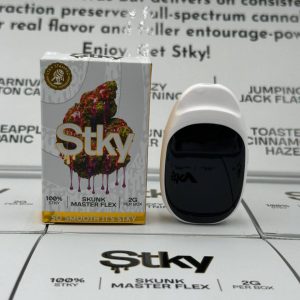
Terpwoods x Holy Water 1G Disposable
Product Overview
The
Terpwoods x Holy Water 1G Disposable is a compact, pre-filled vaporizer product presented in a ready-to
-use disposable format. Its design combines portability with a self-contained construction, allowing the device and its contents to remain together rather than requiring a separate battery or cartridge
.
The 1-gram format refers to the stated amount of oil contained within the device. Product specifications, formulation, ingredients, cannabinoid concentration, and terpene profile can vary by batch and market. Because of that, the packaging and applicable laboratory information provide the most reliable source for confirming the exact contents of an individual unit
.
The device is generally characterized by a small, portable form that can fit easily into a pocket, bag, or storage case. Its simple construction is intended to keep the hardware and oil together in one unit. Once the contents have been depleted, the complete disposable device is typically treated as an electronic product requiring appropriate disposal according to local rules.
Design and Construction
A disposable vaporizer generally consists of several integrated components. These commonly include a reservoir containing the formulation, an atomizer or heating element, a power source, airflow openings, and an exterior housing.
The integrated construction gives the product a straightforward physical profile. Unlike a rechargeable battery-and-cartridge system, the disposable format does not depend on a separate battery being paired with a removable cartridge.
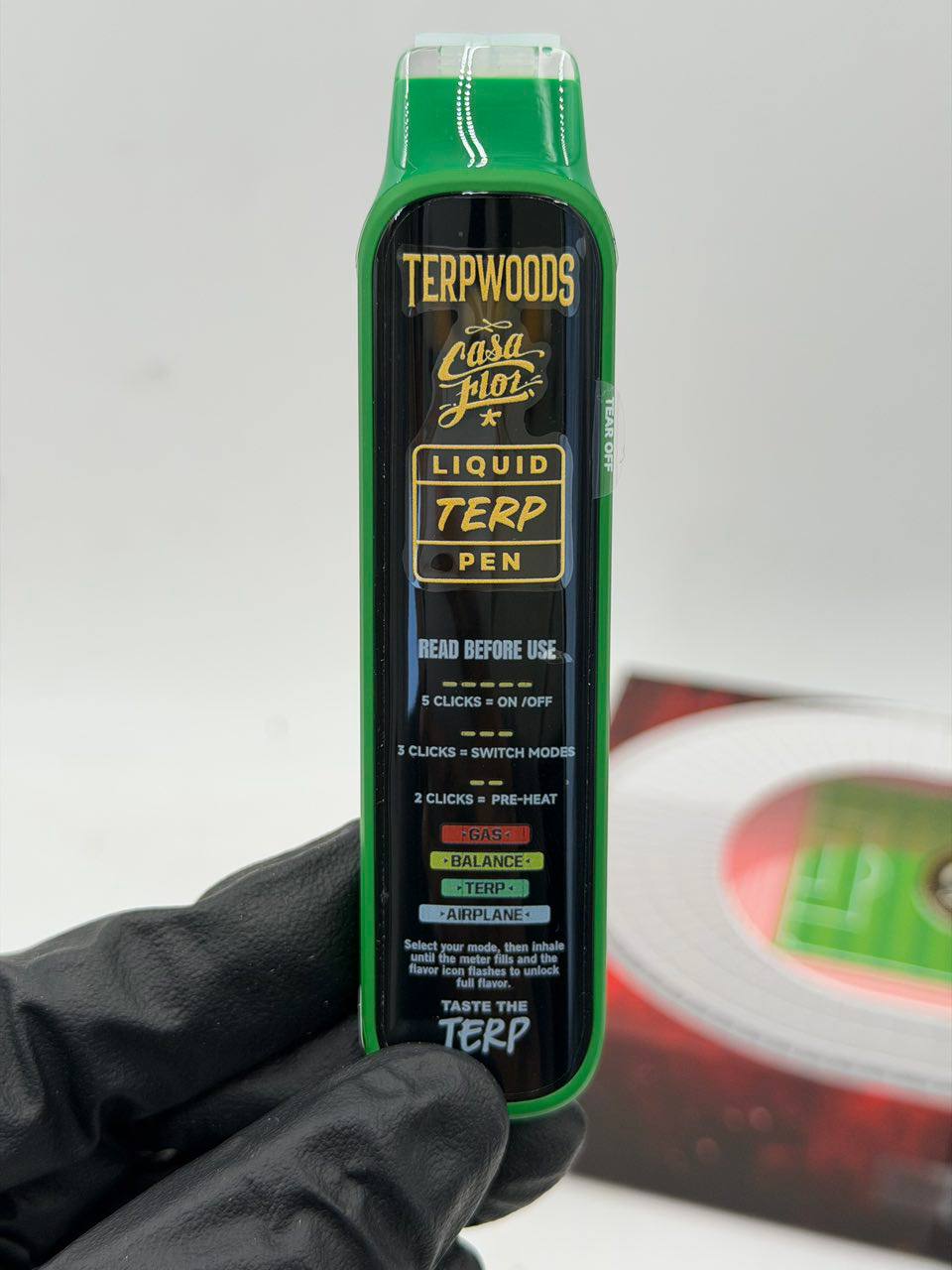
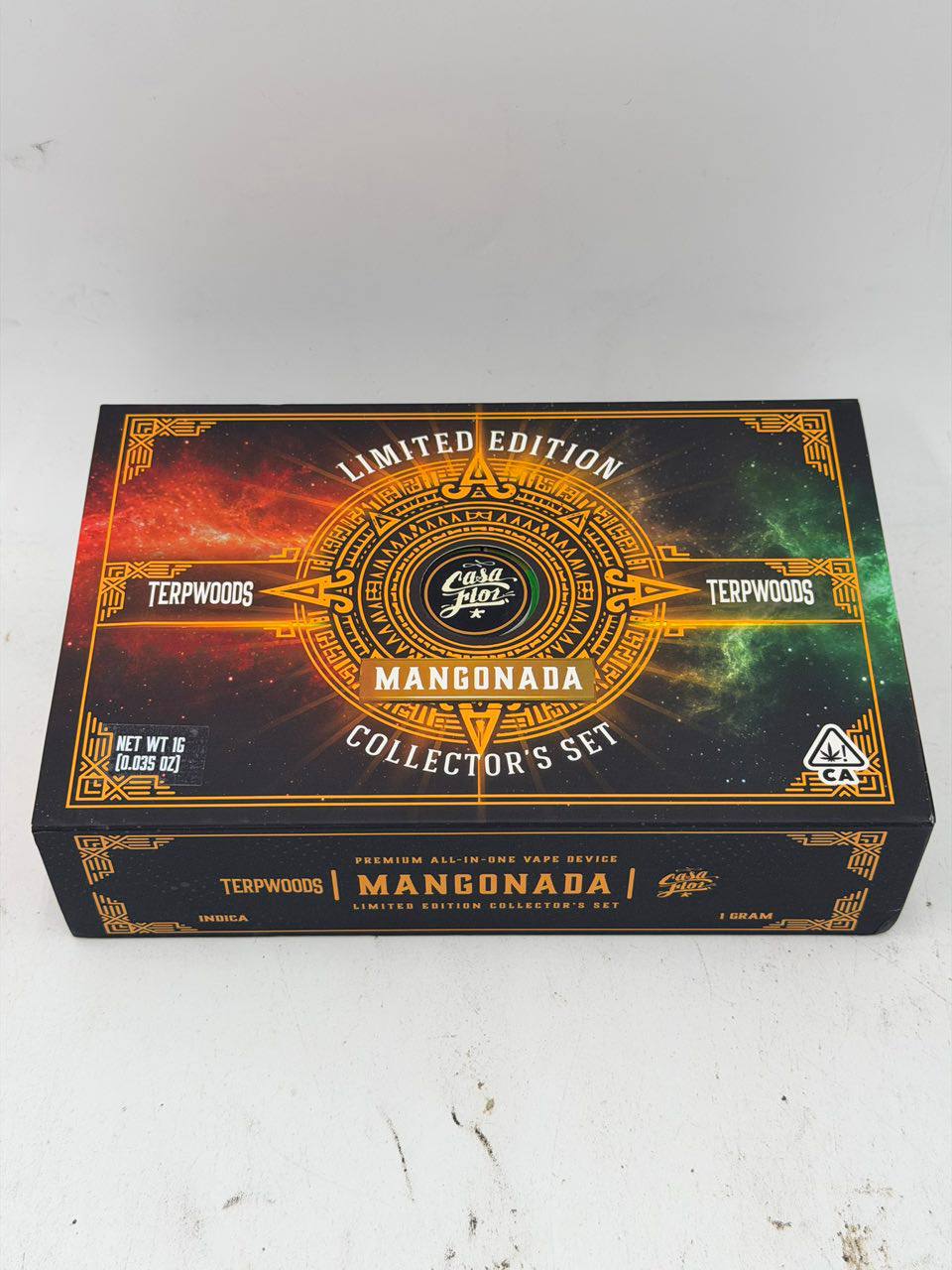
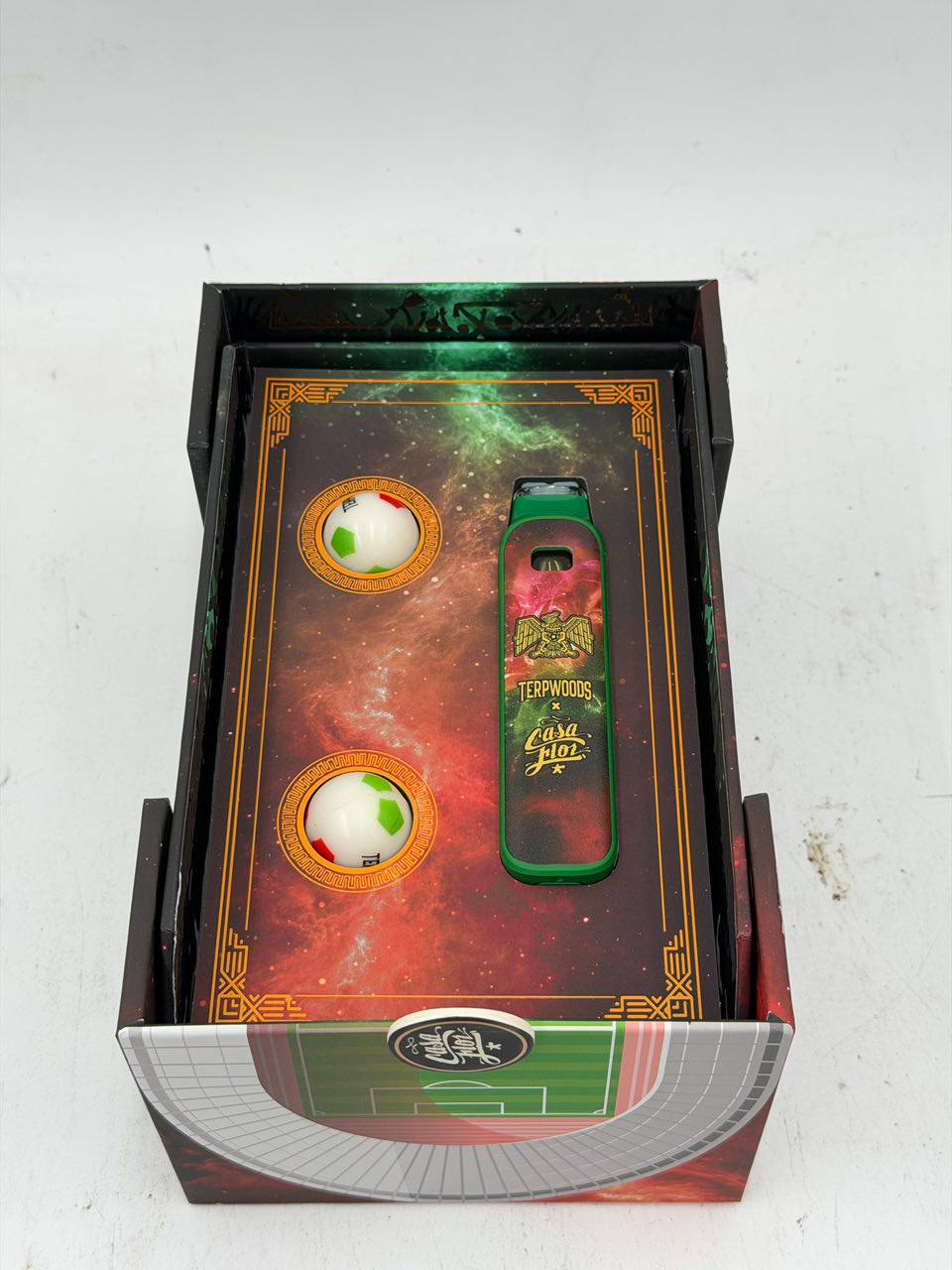
The exterior may feature branding associated with the collaboration between Terpwoods and Holy Water. Visual details, colors, logos, and packaging can differ depending on the specific production run. Therefore, the physical appearance of one unit should not be treated as confirmation of its formulation or authenticity.
Packaging information remains especially important for identifying the product accurately. Labels may provide details such as the stated contents, batch information, manufacturing information, warnings, testing information, and other legally required information.
1-Gram Format
The stated 1-gram capacity describes the amount of material contained in the reservoir. It does not necessarily indicate the total weight of the complete device because the hardware, battery, housing, mouthpiece, and other components also contribute to the overall weight.
A 1-gram disposable therefore represents a relatively compact product category in comparison with larger-capacity vaporizer formats. The actual number of uses obtained from a unit can vary considerably because individual usage patterns differ.
Factors such as draw duration, frequency of use, airflow characteristics, heating behavior, and formulation can influence how quickly the reservoir is depleted. For this reason, the stated capacity should be understood as a measurement of contents rather than a guaranteed number of inhalations.
Oil and Formulation Information
The contents of a vaporizer should be identified through the product label and, where available, an independent laboratory report. Appearance alone cannot reliably establish cannabinoid concentration, terpene composition, purity, or the presence of contaminants.
A formulation may contain cannabinoids together with aromatic compounds commonly referred to as terpenes. The precise composition depends on the manufacturer and the particular batch.
Laboratory documentation can provide more useful information than general product descriptions. Depending on the jurisdiction and testing program, documentation may include cannabinoid concentrations, terpene information, residual solvent results, microbial testing, heavy-metal testing, pesticide screening, and other analytical measurements.
When such information is available, the batch or lot number should correspond with the unit being examined. This helps ensure that laboratory information actually applies to the particular product.
Flavor and Aroma Characteristics
The sensory characteristics of a vaporizer are influenced by its formulation rather than by the hardware alone. Terpenes and other aromatic compounds can contribute to the smell and taste perceived during use.
Descriptions of flavor should therefore be treated as sensory observations rather than guarantees. Individual perception can differ because people experience aroma and taste differently.
Environmental factors can also influence perception. Storage conditions, exposure to heat, light, or air, and the age of the formulation may affect its characteristics over time.
For an accurate description of a particular batch, the manufacturer's stated profile and corresponding laboratory documentation provide the strongest reference points.
Portability
One of the defining characteristics of a disposable vaporizer is its compact format. The integrated design eliminates the need to carry a separate battery or cartridge.
Its relatively small footprint can make it physically convenient to store. However, portability does not remove the need for appropriate storage. The device contains both electronic components and a formulated substance, so it should be kept in a secure location away from children and animals.
Extreme temperatures should also be avoided. Excessive heat can affect the battery, housing, and formulation, while unsuitable storage conditions may contribute to leakage or other hardware problems.
Hardware Characteristics
A disposable vaporizer typically contains an internal battery that powers a heating element. When the device is activated, the heating element warms the formulation so that an aerosol can be produced.
The precise activation system depends on the hardware design. Some disposable devices use an automatic draw-activated mechanism, while others may incorporate an external activation control.
Airflow is another important hardware characteristic. The internal pathway determines how air moves through the device and interacts with the heating system.
Because hardware designs differ, technical specifications should be confirmed through the manufacturer's information rather than assumed from the general appearance of a disposable unit.
Packaging and Identification
Packaging serves several purposes beyond visual presentation. It can contain information needed to identify the product, verify its contents, and understand applicable warnings.
Relevant information may include a product name, batch number, manufacturing details, stated contents, cannabinoid information, testing references, and regulatory labeling.
Packaging should remain with the product whenever possible. Keeping the original information available can make it easier to identify the exact batch and review applicable instructions or warnings.
Authenticity can also be difficult to determine from appearance alone. Counterfeit products may imitate familiar branding, packaging, or hardware. Verification through legitimate manufacturer information and batch-specific documentation provides a more reliable approach.
Storage Considerations
Appropriate storage helps protect both the device and its contents. A cool, dry environment away from direct sunlight is generally preferable for electronic vaporizer products.
The device should not be exposed unnecessarily to high temperatures, excessive moisture, or prolonged direct sunlight. Physical damage should also be avoided because the unit contains an internal battery and electronic components.
Safe storage is particularly important in households where children or animals may have access to personal belongings. The device should remain secured and clearly separated from ordinary household items.
If the device develops visible damage, leakage, unusual swelling, or other physical abnormalities, it should not be treated as a normal functioning unit.
Responsible Handling
A disposable vaporizer combines an electronic power source with a formulated substance, so responsible handling involves more than simply considering the contents.
The device should be kept away from open flames and sources of excessive heat. It should also be protected from crushing, puncturing, or other physical damage.
The product should remain in its original packaging when it is not being examined or stored for use. Clear labeling can help prevent accidental confusion with other household products.
Because regulations differ between jurisdictions, possession, use, transportation, and disposal may also be subject to local requirements.
Product Information and Verification
Product descriptions can provide useful background information, but they should not replace official labeling or laboratory documentation.
For cannabinoid content, the product label and applicable certificate of analysis are more appropriate sources. A certificate of analysis may identify the batch tested and provide laboratory measurements for the formulation.
Verification is particularly relevant when a product is presented as a collaboration or special edition. Branding can change over time, and different production runs may have different packaging or specifications.
A product's appearance should therefore be considered separately from its verified laboratory and regulatory information.
Disposable Format Compared With Rechargeable Devices
Disposable and rechargeable vaporizer systems differ primarily in how their hardware is managed.
A disposable device generally integrates the reservoir, heating system, and battery into one unit. By contrast, rechargeable systems often separate the battery from the cartridge or pod.
This difference affects maintenance and disposal. Rechargeable systems may allow the battery to be reused with replacement cartridges, while a disposable unit is generally designed around a single integrated hardware cycle.
The disposable format can have fewer separate components, although the complete unit eventually becomes electronic waste. Appropriate disposal is therefore an important part of responsible product handling.
General Safety Information
Cannabis-derived products can contain psychoactive cannabinoids. Products containing THC may affect perception, coordination, attention, judgment, and reaction time.
Individual responses can vary considerably. Factors such as cannabinoid concentration, previous exposure, individual sensitivity, and other substances can influence effects.
Cannabis products should not be combined casually with alcohol or other intoxicating substances. Driving or operating machinery after using an intoxicating cannabis product can create serious safety risks.
People who are pregnant or breastfeeding, individuals taking medications, and anyone with questions about possible interactions should consult an appropriate healthcare professional before using cannabinoid-containing products.
The legal status of cannabis products also varies by location. Local laws should be considered before possession, transportation, or use.
Quality and Testing
Quality assessment depends on more than branding or packaging. Independent testing can provide objective information about the contents of a particular batch.
Testing may evaluate cannabinoid potency and screen for contaminants. Depending on the laboratory and jurisdiction, testing can include pesticides, residual solvents, heavy metals, microbial contaminants, and other substances.
A batch-specific report is more informative than a generic statement about a product line because formulations and production conditions can change between batches.
Consumers and retailers should therefore distinguish between general product claims and verifiable analytical information.
Appearance and Presentation
The exterior presentation of a disposable can influence how the product is recognized, but appearance does not determine quality.
Printed graphics, logos, typography, and color schemes may vary between editions. Packaging may also change as manufacturers update designs or comply with changing regulations.
For that reason, visual differences do not automatically indicate that a product is genuine or counterfeit. Verification should rely on appropriate manufacturer and laboratory information.
Sustainability and Disposal
Disposable electronics create a waste consideration that differs from reusable vaporizer systems. The device contains a battery and electronic components in addition to its remaining formulation.
It should therefore not automatically be placed in ordinary household recycling. Local electronic-waste and battery-disposal requirements provide the appropriate framework for determining how a used device should be handled.
Leaving a depleted device in an appropriate collection system can help reduce improper disposal of batteries and electronic components.
What the 1G Label Means
The 1G designation identifies the stated quantity of formulation contained in the product. It does not represent a guaranteed strength, duration, or number of uses.
Two products with the same stated quantity can differ substantially in cannabinoid concentration and composition. Likewise, two individuals can use the same quantity at different rates.
The most useful interpretation of the 1G specification is therefore simply that the reservoir is labeled as containing one gram of formulation.
Overall Product Profile
The Terpwoods x Holy Water 1G Disposable belongs to the compact disposable vaporizer category. Its defining characteristics include an integrated design, a stated 1-gram capacity, internal heating hardware, and a self-contained battery system.
The exact formulation should be established through the packaging and batch-specific documentation rather than assumed from the product name or visual presentation.
Its physical design emphasizes portability, while its disposable construction distinguishes it from rechargeable cartridge systems. At the same time, responsible storage, handling, legal compliance, and appropriate disposal remain important considerations for the product category.
For accurate product identification, the label, batch information, laboratory documentation, and applicable regulatory information remain the strongest sources. Those details provide a clearer picture of the actual contents and specifications than general descriptions alone.
Product specifications can change between production batches, markets, and editions. Consequently, information printed on the individual package should take priority over generalized descriptions.
The 1-gram capacity identifies the stated quantity of formulation, while the device itself contains additional hardware and battery components. Sensory characteristics can vary according to formulation and individual perception, and laboratory testing provides the most reliable information about cannabinoid content and potential contaminants.
As with other electronic products containing batteries, proper storage and disposal are important. The device should be protected from extreme conditions and kept away from children and animals.
Ultimately, the most reliable product profile comes from combining the physical unit with its original packaging, applicable testing documentation, and current local requirements.
Product Specifications in Greater Detail
A disposable vaporizer can appear simple from the outside, yet several components work together inside the housing. The reservoir holds the formulation, while the heating element is responsible for converting that formulation into an inhalable aerosol. An internal battery supplies power to the heating system, and an airflow pathway connects the mouthpiece with the internal chamber.
The exact arrangement depends on the hardware used for a particular production run. Some devices are activated automatically through airflow, whereas other designs incorporate an activation mechanism. The exterior can also differ between editions without necessarily indicating a change in the formulation.
Because hardware specifications are not always printed in full on the exterior, manufacturer documentation remains the best reference for technical details such as battery capacity, heating technology, charging configuration, and activation method.
Reservoir Design
The reservoir is one of the central components of a disposable device. It contains the formulation before it reaches the heating element.
Reservoir construction can influence how consistently the formulation reaches the heating area. Materials, internal structure, airflow, and heating characteristics all contribute to the overall operation of the device.
The visible amount of material may change as the product is used, although the appearance of the reservoir does not provide a precise measurement of remaining contents. Internal surfaces can also make it difficult to determine the exact quantity visually.
For that reason, the stated capacity should be understood as the original labeled quantity rather than a visual measurement.
Heating Technology
The heating element is responsible for warming the formulation inside the device. When the appropriate conditions are met, heat is transferred to the material, producing an aerosol that travels through the airflow pathway toward the mouthpiece.
Temperature management can influence the character of the aerosol. Excessive heat can affect flavor and hardware performance, while insufficient heating can affect aerosol production.
Different manufacturers use different heating systems and materials. Without technical documentation, it is not possible to determine the precise heating technology solely from the product's exterior.
Airflow and Mouthpiece
Airflow is an important part of the physical design because it connects the internal chamber with the mouthpiece.
The mouthpiece provides the point where the aerosol exits the device. Its dimensions and shape can influence the physical sensation of airflow, although individual perception differs.
An obstruction in the airflow pathway can affect normal operation. Physical damage, residue, or improper storage may contribute to changes in airflow.
Keeping the device protected from debris and environmental contamination can therefore help preserve its physical condition.
Formulation Transparency
Clear product information is especially valuable for products containing cannabinoids. A name or flavor description does not establish cannabinoid concentration by itself.
The package may identify specific cannabinoids and their concentrations. Where independent testing is available, the corresponding laboratory report can provide additional information about the tested batch.
Testing documentation can also help distinguish between expected ingredients and unwanted contaminants. Results vary according to the laboratory, jurisdiction, and testing standards involved.
For a complete product assessment, several pieces of information can be considered together: the package label, batch number, manufacturer information, laboratory results, and applicable regulatory requirements.
Batch Information
Batch numbers provide a useful way of connecting a physical product with production and testing records.
A batch identifier may appear on the package, label, sticker, or another designated area. The format can vary depending on the manufacturer and market.
When laboratory documentation is provided, the batch number should correspond with the product being evaluated. A mismatch can make it difficult to establish whether the laboratory results apply to the particular unit.
Batch information can also be useful when packaging or product specifications change over time.
Packaging Materials
Packaging is designed to protect the product during transportation and storage while also providing information to the purchaser or holder.
Depending on the market, packaging can include regulatory warnings, ingredient information, manufacturing details, testing references, and age restrictions.
The package can also protect the device from dust, physical impact, and environmental exposure before it is opened.
Packaging requirements vary significantly between jurisdictions. Therefore, the presence or absence of a particular label element should be evaluated according to the rules applicable to the market where the product was distributed.
Product Authenticity
Authenticity can be difficult to determine from appearance alone. Popular products and recognizable brands can sometimes be imitated through packaging or similar-looking hardware.
Several forms of information can contribute to verification. These may include manufacturer-issued authentication systems, batch information, laboratory documentation, packaging details, and authorized distribution records.
A printed logo by itself does not establish authenticity. Likewise, a familiar color scheme or package shape cannot independently confirm the origin of a product.
When available, manufacturer verification information provides a stronger reference point than visual comparison.
Storage Environment
Environmental conditions can influence electronic devices and their contents. High temperatures may affect batteries, seals, adhesives, and formulations, while excessive moisture can create problems for electronic components.
Direct sunlight can also increase the temperature of the device and its surroundings. A stable, dry storage environment is therefore preferable.
Physical pressure should be avoided as well. Disposable devices contain internal components that can be damaged through crushing, bending, or puncturing.
Secure storage is especially important when children or animals are present. The product should remain inaccessible to anyone who could accidentally handle or ingest its contents.
Transportation Considerations
Transportation requirements for cannabis products vary by jurisdiction. Local regulations can govern possession, movement between regions, and transport across borders.
Electronic devices with batteries may also be subject to separate transportation rules, particularly during air travel.
Because these requirements can change, current local regulations should be reviewed before transporting the product. General assumptions about legality should not replace location-specific information.
Cannabinoid Concentration
Cannabinoid concentration is separate from the total amount of formulation. A product can contain one gram of material while having a particular cannabinoid concentration determined by laboratory analysis.
For example, the total mass of the formulation does not by itself establish how much THC or another cannabinoid is present.
This distinction is important when interpreting labels. The amount of material and the concentration of active compounds describe different characteristics of the product.
Laboratory results can provide a more precise picture of cannabinoid content than the product name or capacity designation.
Terpene Information
Terpenes are naturally occurring aromatic compounds found in many plants. In cannabis products, they can contribute to aroma and flavor characteristics.
The terpene composition of a particular formulation can be natural, added, or derived through different production methods, depending on how the product was manufactured.
A terpene profile should therefore be evaluated from the ingredient information or laboratory documentation where available. General flavor names do not necessarily identify every compound present in the formulation.
Individual sensory experiences can also differ, meaning that the same formulation may be described differently by different people.
Product Consistency
Consistency depends on several factors, including formulation, hardware, storage, and production controls.
A properly manufactured device is expected to contain a formulation corresponding with its stated specifications. However, batch variation can occur, and different production runs may have slightly different characteristics.
Independent laboratory testing can provide useful information about a particular batch. Packaging and manufacturing records can provide additional context.
The most reliable assessment therefore comes from multiple sources rather than from a single marketing claim.
Hardware and Formulation Interaction
The performance of a disposable device depends partly on the relationship between the formulation and the heating system.
A formulation with a particular viscosity may interact differently with a heating element than another formulation. Airflow and reservoir design can also affect how efficiently material reaches the heating area.
This means that the same stated capacity does not guarantee identical hardware performance across different products.
For this reason, technical comparisons should be based on documented specifications rather than assumptions based solely on size or appearance.
Signs of Physical Damage
A disposable device can occasionally develop physical problems through impact, improper storage, manufacturing defects, or normal wear.
Visible cracks, severe deformation, leaking material, unusual swelling, or significant damage to the housing can indicate that the product should no longer be treated as an ordinary functioning device.
Because an internal battery is present, physical damage deserves particular attention. Damaged batteries can present safety concerns.
The safest approach is to keep a damaged device away from heat and ignition sources and follow local guidance for electronic-waste or battery disposal.
Responsible Product Awareness
Understanding the contents of a product is an important part of responsible handling. Cannabis-derived formulations can contain intoxicating cannabinoids, and their effects may differ between individuals.
The presence of THC can affect attention, coordination, reaction time, perception, and judgment. These effects are particularly relevant to activities such as driving and operating machinery.
Products containing intoxicating cannabinoids should also be kept away from children and animals. Accidental exposure can create serious risks.
Clear labeling, secure storage, and awareness of local regulations all contribute to safer handling.
Legal Considerations
Cannabis regulations differ significantly between countries, states, provinces, and municipalities.
Rules can address possession, sale, age requirements, product testing, packaging, advertising, transportation, and consumption. A product that is permitted in one jurisdiction may be restricted in another.
Online product information can also become outdated when regulations change. Current government or regulatory sources should therefore be consulted for location-specific requirements.
The legality of a particular product should never be inferred solely from its availability or packaging.
Environmental Considerations
Disposable electronic products create environmental considerations because they combine several materials in a single unit.
The battery, circuit components, plastic or metal housing, reservoir, and remaining formulation can require different disposal methods.
Electronic-waste programs may provide appropriate collection options. Battery-recycling programs can also be relevant because lithium-based batteries require careful handling.
Local disposal guidance should take priority because recycling systems differ between communities.
General Product Summary
The Terpwoods x Holy Water 1G Disposable is a compact, integrated vaporizer product identified by a stated 1-gram formulation capacity.
Its overall structure combines a reservoir, heating system, battery, airflow pathway, mouthpiece, and exterior housing. The integrated design separates it from systems that use independent rechargeable batteries and replaceable cartridges.
The exact cannabinoid content, terpene composition, hardware specifications, and testing results should be confirmed through the individual product's packaging and applicable documentation.
Its appearance can provide information about branding and presentation, but appearance alone cannot establish formulation, potency, safety, or authenticity.
Frequently Asked Questions
What does 1G mean?
The 1G designation refers to the stated amount of formulation contained within the device. It does not describe the total weight of the hardware and does not guarantee a specific number of uses.
What determines the contents?
The product label and applicable laboratory documentation provide the most reliable information about the formulation. The product name alone cannot establish cannabinoid concentration or terpene composition.
Is the hardware rechargeable?
Rechargeability depends on the specific device design. Some disposable products are designed with non-rechargeable batteries, while other products in the broader category may include rechargeable hardware. The individual package or manufacturer documentation should be checked for confirmation.
How should the product be stored?
A cool, dry location away from direct sunlight and excessive heat is generally appropriate for electronic vaporizer storage. The device should also remain inaccessible to children and animals.
Can appearance confirm authenticity?
No. Packaging and hardware appearance can provide useful clues, but they cannot independently establish authenticity. Manufacturer verification information and batch-specific documentation provide stronger evidence.
What information does laboratory testing provide?
Depending on the testing program, laboratory documentation can provide cannabinoid measurements and screening results for substances such as pesticides, residual solvents, heavy metals, and microbial contaminants.
Does the 1-gram capacity indicate potency?
No. Capacity and potency describe different characteristics. The capacity identifies the amount of formulation, while potency depends on the concentration of cannabinoids within that formulation.
Does the product contain THC?
The answer depends on the specific formulation and batch. The product label and laboratory report should be used to determine which cannabinoids are present and at what concentrations.
Can flavor descriptions guarantee a specific experience?
No. Flavor and aroma descriptions are sensory references. Individual perception varies, and the actual composition should be confirmed through product documentation.
What happens when the device is depleted?
A depleted disposable remains an electronic device containing a battery and other components. It should be handled according to local electronic-waste and battery-disposal requirements rather than automatically being placed in ordinary household waste.
Closing Overview
The 1-gram disposable format combines portability with an integrated hardware design. Its reservoir, heating element, battery, airflow pathway, and mouthpiece are housed within a single device, creating a compact product profile.
However, the physical format does not provide enough information to determine the exact contents. Cannabinoid concentration, terpene composition, testing status, and manufacturing details should be confirmed through the individual package and appropriate laboratory documentation.
Storage and handling also remain important. Exposure to extreme heat, moisture, physical damage, or unsafe environments can affect an electronic device containing a battery.
Ultimately, reliable product information comes from verified documentation rather than assumptions based on branding, appearance, capacity, or general category descriptions. The package, batch information, laboratory results, and applicable local regulations together provide the clearest basis for understanding the product.




Reviews
There are no reviews yet.