Description
Whole Melt Phase Five 2G Disposable: Product Overview
Introduction
The
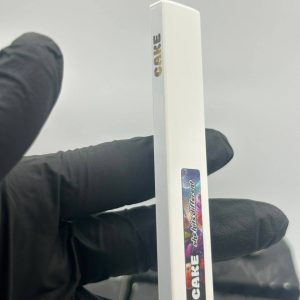
Whole Melt Phase Five 2G Disposable is a compact vaporizer product presented in a ready
-to-use disposable format
. The device is associated with the Whole Melt product line and is identified by the Phase Five edition and a stated 2
-gram capacity
. Its design is intended to combine a portable form factor with a self
-contained vaping setup
, allowing the device to remain simple in structure compared with larger refillable systems.
Because product specifications can vary by market, batch, and manufacturer, the exact contents, cannabinoid profile, hardware configuration, and testing information should be confirmed from the packaging or an official product source. In particular, the stated 2-gram capacity describes the amount advertised for the device and does not, by itself, confirm potency or cannabinoid concentration.
Whole Melt Phase Five 2G Disposable at a Glance
The Phase Five 2G Disposable can be described through several basic characteristics. First, it uses a disposable device format rather than a refillable cartridge system. Second, the product is identified as a 2G disposable, indicating a larger advertised oil capacity than many smaller single-use vape formats. Finally, the Phase Five name distinguishes this edition from other products that may appear under the same broader brand family.
The compact design may make the product easy to store and transport. At the same time, the actual dimensions, battery specifications, heating technology, and airflow design should be checked on the package because these details are not necessarily identical across production runs.
Design and Build
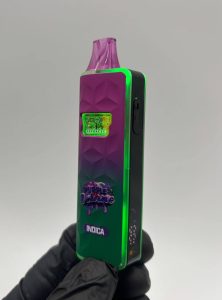
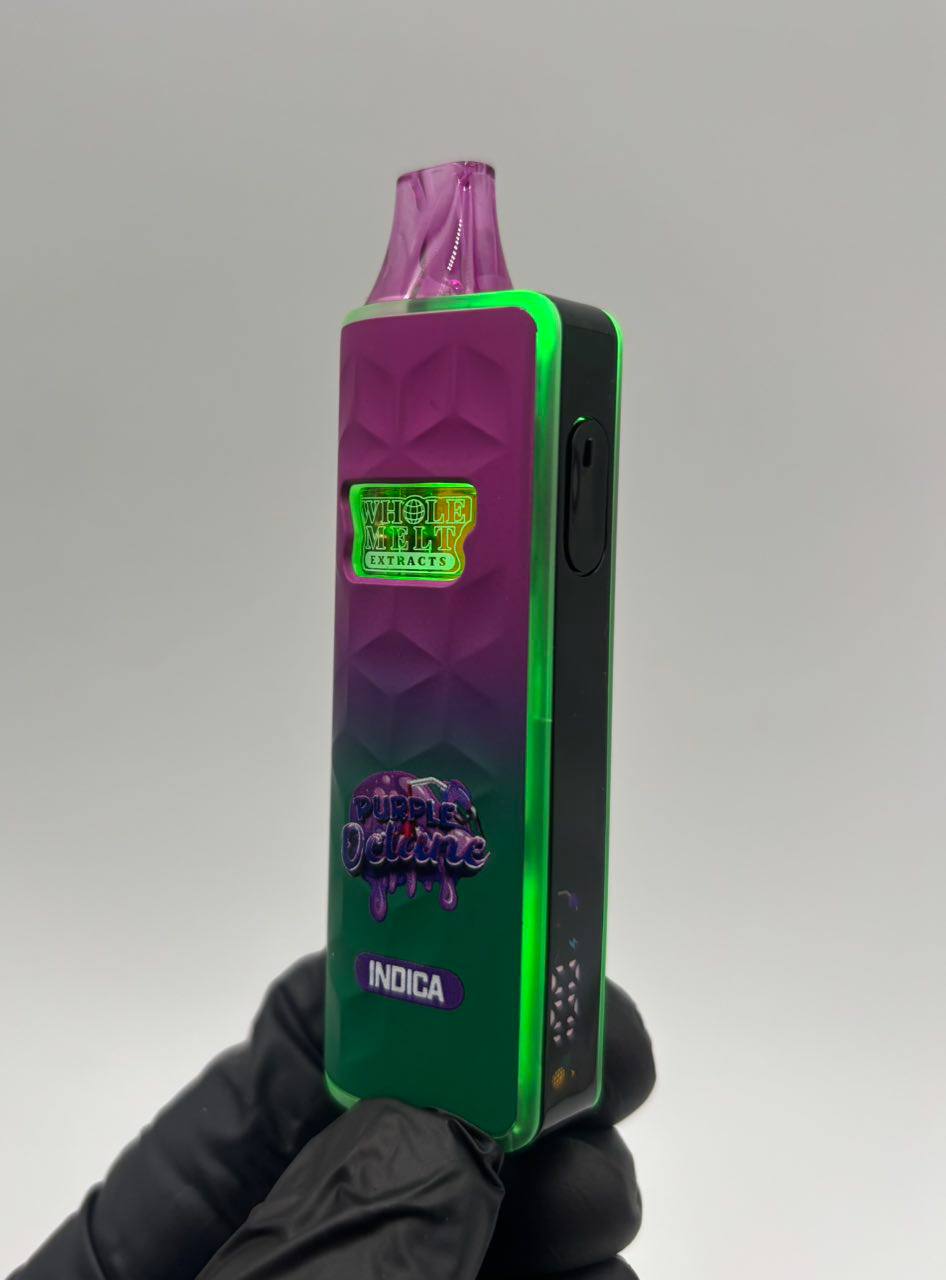
The physical design of a disposable vaporizer generally centers on convenience and portability. A self-contained body houses the internal reservoir, heating components, battery, and airflow pathway within one unit. As a result, there is usually no separate cartridge, external tank, or refill bottle involved in the basic setup.
The Whole Melt Phase Five 2G Disposable follows this general product category. Its disposable construction gives the device a streamlined appearance, while the compact body can be carried more easily than many larger vaporizer systems.
Materials and hardware can differ between versions. Therefore, the packaging remains the most reliable source for information about the specific device in hand. Details such as charging capability, activation method, mouthpiece construction, and indicator lights should not be assumed unless they are stated on the product itself.
2G Capacity
The “2G” label is one of the most notable identifiers for the Whole Melt Phase Five Disposable. In product terminology, it generally refers to an advertised two-gram oil capacity. This measurement relates to the amount of material contained in the device and should not be interpreted as a direct measurement of potency.
Two products can carry the same capacity label while having very different cannabinoid concentrations or terpene profiles. Likewise, the number of draws available from a device can vary because draw length, airflow, temperature, battery performance, and individual use patterns all influence consumption.
For that reason, capacity is best viewed as one product specification among several rather than as a measure of overall strength or quality.
Vaporizer Format
Disposable vaporizers are built around an all-in-one concept. The reservoir and battery are contained within the same product, which reduces the number of separate components involved in the device. This design can make the overall product more straightforward to understand from a hardware perspective.
A disposable format also means that the device is generally intended to reach the end of its usable life as a complete unit. Whether a particular version can be recharged depends on the hardware used. Some disposables include a charging port, while others rely on a sealed battery system.
For the Whole Melt Phase Five 2G Disposable, the correct charging and operating specifications should be verified directly from the packaging and manufacturer information.
Oil and Cannabinoid Information
The oil inside a disposable vaporizer may contain cannabinoids, terpenes, and other compounds depending on the formulation. However, the brand name and edition alone do not establish the exact chemical composition of a specific batch.
Laboratory testing is the most useful source for determining cannabinoid concentrations and identifying the compounds reported in a product. When a certificate of analysis is available, it may provide information about cannabinoid content, terpene composition, and screening for certain contaminants.
This distinction matters because product labels can provide broad descriptions, while laboratory documentation can offer more detailed batch-specific information.
Terpene Profile
Terpenes contribute to the aroma and flavor characteristics associated with many cannabis-derived products. Different formulations can produce distinct sensory profiles based on the compounds present in the oil.
The Whole Melt Phase Five name does not, by itself, provide enough information to identify a precise terpene profile. Instead, the packaging, batch documentation, or laboratory report should be used to determine whether specific terpenes are listed.
A clear terpene description can be useful for product identification, especially when several versions of a disposable are available. However, any flavor or aroma claims should be supported by the specific product documentation rather than inferred from the product title.
Flavor and Aroma Expectations
Flavor is one of the most noticeable characteristics of vapor products, yet it can also be one of the most difficult to describe accurately without verified source information. The experience can be influenced by the oil formulation, terpene content, heating element, airflow, and hardware condition.
As a result, broad descriptions such as sweet, fruity, earthy, herbal, citrus-like, or creamy should only be used when they match the verified formulation. The Phase Five edition should therefore be described using the flavor information printed on its packaging or supplied through an official laboratory or product record.
This approach keeps the product description useful while avoiding unsupported claims.
Hardware and Heating
The heating system is responsible for converting the oil into an inhalable aerosol. In disposable products, this system is generally integrated into the device body and activated through the hardware's built-in controls or draw mechanism.
Different manufacturers use different heating elements and airflow configurations. These differences can influence vapor production, consistency, and battery performance. However, the exact internal system used by a specific Whole Melt Phase Five unit should not be assumed without documentation.
For this reason, hardware claims should remain limited to specifications that can be verified from the product itself.
Portability and Form Factor
The disposable format is strongly associated with portability. A compact device can generally be stored in a small personal space, making the format practical for users who prefer an integrated vaporizer rather than separate components.
The 2G capacity also provides a larger reservoir than many smaller disposable formats. Nevertheless, a larger capacity does not automatically indicate longer battery life or a particular number of uses. Consumption varies widely between individuals and devices.
The physical dimensions, total weight, and battery size should therefore be considered separately when evaluating the design.
Packaging and Product Identification
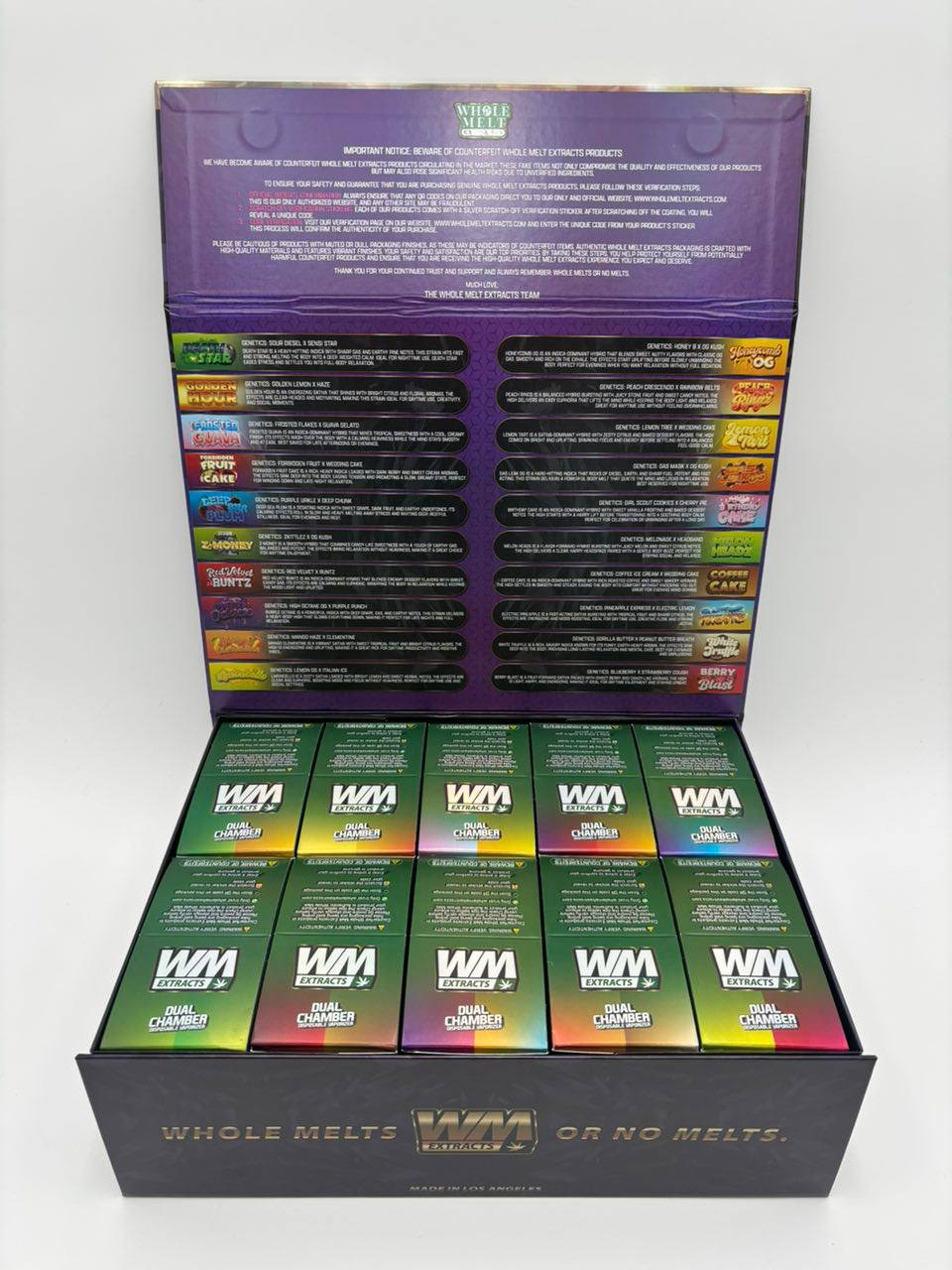
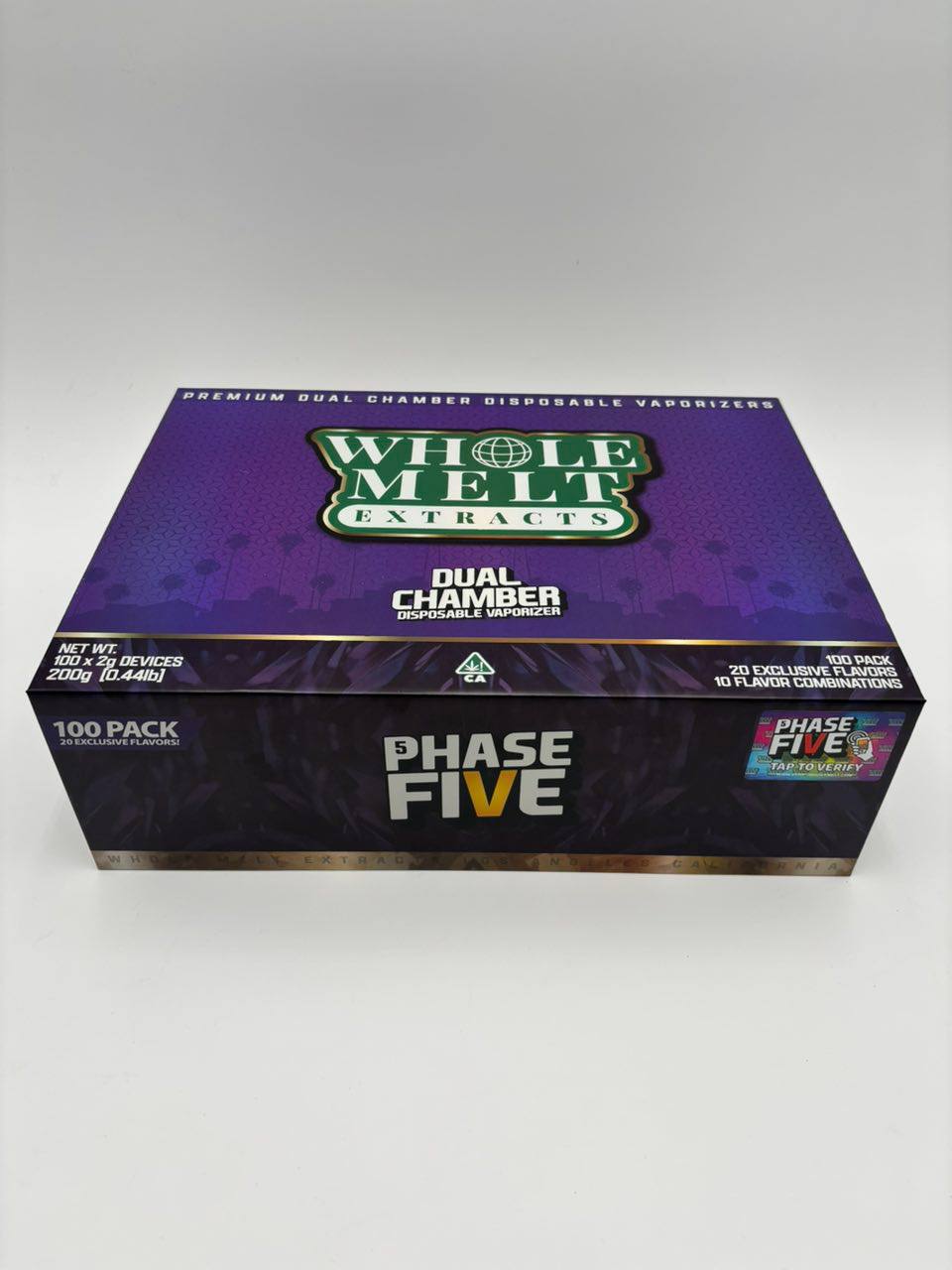
Packaging plays an important role in product verification. A properly labeled package can provide the product name, edition, capacity, batch information, ingredient details, testing information, manufacturing data, or regulatory disclosures depending on the jurisdiction.
For a Whole Melt Phase Five 2G Disposable, the exact packaging should be checked carefully because visual branding alone may not establish authenticity. Batch numbers, QR codes, laboratory reports, and manufacturer information can provide additional context when available.
Product identification becomes especially important when counterfeit or unauthorized versions of branded vapor products may circulate in some markets.
Authenticity Considerations
Branded disposable products can be difficult to verify solely from appearance. Packaging quality, labeling consistency, batch information, and traceable documentation can all contribute to a more reliable verification process.
No single visual feature should automatically be treated as proof of authenticity. Instead, several indicators can be considered together. Official verification systems, where available, can provide stronger evidence than photographs or informal online listings.
Likewise, missing laboratory information or inconsistent packaging may warrant additional caution.
Storage and Product Condition
Storage conditions can affect the physical condition of a vaporizer and its contents. Excessive heat, direct sunlight, moisture, and physical damage may create problems for both hardware and oil.
A disposable device should remain in a suitable environment that protects it from extreme temperatures and impact. Packaging should also be retained when it contains batch information or safety details.
Over time, changes in appearance, viscosity, aroma, or device performance may occur. Such changes do not automatically reveal the cause, so unusual conditions should be evaluated using the manufacturer's guidance and available testing information.
General Product Experience
The experience produced by a disposable vaporizer depends on several interacting factors. Formulation, terpene content, hardware design, battery performance, airflow, and individual sensitivity can all influence the result.
Therefore, a product description should avoid promising a specific experience that every user will have. Terms such as “smooth,” “powerful,” or “long-lasting” can be subjective unless they are tied to measurable specifications or verified testing.
A more accurate approach is to explain the product's structure, stated capacity, edition, and available laboratory information while leaving subjective outcomes to the individual.
Product Consistency
Consistency is influenced by manufacturing standards and quality control. When a product is manufactured under consistent conditions and accompanied by batch-specific information, the specifications can be evaluated more reliably.
However, consistency should not be assumed simply because two packages display the same product name. Different batches may contain different formulations, hardware revisions, or packaging changes.
Batch-level documentation is therefore particularly valuable for anyone evaluating a specific unit.
Laboratory Testing
Laboratory testing can provide important information about the contents of a cannabis-derived vapor product. Depending on the testing program, a report may include cannabinoid concentrations, terpene measurements, residual solvent screening, microbial testing, heavy-metal analysis, and other quality indicators.
The presence of a laboratory report does not eliminate every uncertainty, but it provides more meaningful evidence than branding alone. When a report is available, the batch number should correspond to the product being evaluated.
This connection between package and laboratory record is particularly useful for product identification and quality review.
Responsible Product Information
Any description of a cannabis-derived vapor product should distinguish between factual specifications and subjective claims. Capacity, device type, package information, and laboratory results can be presented as product facts when they are documented.
Health, therapeutic, or performance claims require a different level of evidence and should not be inferred from branding or consumer impressions. A cannabis product should not automatically be described as treating, preventing, or curing a medical condition.
Similarly, the presence of a cannabinoid does not establish a medical benefit.
Legal and Regulatory Context
Cannabis and cannabis-derived products are subject to different laws depending on location. Requirements for sale, possession, labeling, testing, packaging, and age restrictions can vary substantially between jurisdictions.
For that reason, the legal status of a Whole Melt Phase Five 2G Disposable cannot be determined from the product name alone. Local laws and regulations should be consulted before any transaction or use.
Retailers and consumers may also encounter different rules regarding product authentication, laboratory testing, and packaging disclosures.
Why Product Specifications Matter
A detailed product description is most useful when it separates verified facts from assumptions. The 2G capacity, disposable format, edition name, and package information provide a starting point for identification.
Beyond those basic details, laboratory results and manufacturer documentation can clarify cannabinoid content, terpene composition, and quality-related information. This makes the description more useful for comparison and record-keeping.
At the same time, subjective language should remain clearly framed as descriptive rather than guaranteed.
Frequently Asked Questions
What is the Whole Melt Phase Five 2G Disposable?
It is a disposable vaporizer product identified as the Whole Melt Phase Five edition with an advertised 2-gram capacity. Exact formulation and hardware specifications should be confirmed from the package or official product documentation.
What does 2G mean?
The 2G label generally refers to the advertised amount of oil contained in the device. It does not indicate cannabinoid potency by itself.
Does 2G mean stronger?
Not necessarily. Capacity and potency are separate measurements. A product with more oil is not automatically more concentrated.
How can the product be identified?
Packaging information, batch details, laboratory documentation, and manufacturer information can help establish the identity of a specific unit.
Does every Phase Five unit have identical specifications?
Not necessarily. Hardware and formulation can vary by production run, market, or version, so the specific package should be checked.
Is a laboratory report important?
Yes. A batch-specific report can provide useful information about cannabinoids, terpenes, and certain quality or contaminant screens.
Can the device be recharged?
That depends on the particular hardware version. The presence or absence of a charging port and the manufacturer's instructions should be checked directly.
How should the product be stored?
Storage conditions should follow the manufacturer's guidance and generally protect the device from excessive heat, moisture, direct sunlight, and physical damage.
The Whole Melt Phase Five 2G Disposable is presented as a compact, self-contained vaporizer within the Whole Melt product range. Its primary identifying characteristics are the Phase Five edition, disposable format, and advertised 2-gram capacity.
From a product-information perspective, the most important details extend beyond the name on the package. The formulation, cannabinoid concentrations, terpene profile, hardware configuration, battery specifications, and laboratory results can all vary and should therefore be verified from reliable documentation.
A clear product description is strongest when it focuses on information that can be confirmed. The 2G capacity provides a useful indication of the advertised reservoir size, while the disposable format describes the overall hardware concept. Meanwhile, laboratory and batch information can provide a more detailed picture of the specific product.
Ultimately, the Whole Melt Phase Five 2G Disposable should be evaluated using verified specifications rather than assumptions based only on branding or appearance. Packaging, batch information, laboratory results, and local regulatory requirements provide the most useful foundation for understanding a particular unit.
Product Information and Transparency
Clear product information helps readers understand what they are actually considering. For a disposable vaporizer, the most useful details usually include the advertised capacity, product edition, ingredients, cannabinoid information, batch identification, and available laboratory results.
The Whole Melt Phase Five 2G Disposable can therefore be discussed through a combination of its physical format and documented specifications. The “Phase Five” designation identifies the edition, while the “2G” designation refers to the stated capacity. These labels provide basic product information, although they do not describe every technical feature.
Transparency becomes especially important when several products use similar names or packaging styles. A detailed label can help distinguish one version from another and can also provide information that is relevant to quality assessment.
Understanding Disposable Vape Technology
Disposable vaporizers combine several components within a single housing. A typical unit contains a reservoir, heating element, battery, airflow pathway, and mouthpiece. These components work together as one integrated system.
Unlike a traditional refillable vape, a disposable device does not require a separate tank or cartridge during ordinary operation. Consequently, the overall structure can remain compact and relatively simple.
The technology inside the device can still vary considerably. Heating elements may differ in construction, battery capacity can change between models, and airflow systems may be designed differently. Therefore, the exact technical specifications of the Whole Melt Phase Five should come from documentation associated with the specific version.
Reservoir Capacity and Consumption
The advertised two-gram capacity provides one measurable characteristic of the product. However, the amount of material consumed during individual use can vary widely.
Longer inhalations generally consume more material than shorter ones, while repeated use naturally reduces the available oil over time. Device temperature, airflow, and hardware design can also influence consumption.
For this reason, capacity should not be translated into an exact number of sessions or inhalations. Those figures depend on individual patterns and cannot be reliably predicted from the 2G label alone.
Battery Performance
Battery performance represents another important part of a disposable vaporizer. A device may contain enough battery capacity to support its intended reservoir, although the actual experience depends on multiple factors.
Battery efficiency can be influenced by the heating system, activation method, temperature, frequency of use, and storage conditions. Some devices are designed with rechargeable batteries, while others use a sealed power source.
Because these specifications are not necessarily universal across every edition, the packaging remains the most appropriate reference for the Phase Five model being evaluated.
Airflow and Vapor Production
Airflow affects how a vaporizer operates and can influence the amount and density of aerosol generated by the heating system. A restricted airflow pathway may produce a different result from a more open design.
Similarly, vapor production can change as the battery level decreases or as the reservoir reaches a lower level. These differences are associated with hardware behavior rather than simply the amount of oil contained inside the device.
A product description can therefore mention airflow and vapor production as technical considerations without presenting an unverified experience as a guaranteed result.
Mouthpiece Design
The mouthpiece forms the connection between the device and the airflow pathway. Its dimensions, material, and shape can differ between disposable models.
A properly fitted mouthpiece is generally designed to maintain airflow while keeping the internal components protected. However, precise construction details should only be included when they have been confirmed for the specific Phase Five version.
This is another reason why physical inspection and manufacturer information remain valuable when identifying a product.
Visual Appearance
Product appearance often plays a role in identification. Packaging graphics, printed information, logos, edition names, and overall device design can distinguish one product from another.
Nevertheless, appearance alone does not confirm authenticity. Packaging can sometimes be reproduced or altered, which means visual similarities should be considered alongside batch information and other verification methods.
The strongest product descriptions therefore treat appearance as an identifying feature rather than proof of origin or quality.
Batch Numbers and Traceability
Batch numbers provide an important link between a physical product and its production information. When a product has a corresponding certificate of analysis, the batch number can help connect the laboratory record to the specific item.
This relationship improves traceability because testing results can be associated with a particular production run rather than a broad brand name.
For the Whole Melt Phase Five 2G Disposable, any available batch identifier should be compared carefully with supporting documentation. Differences between package information and laboratory records can make verification more difficult.

Certificate of Analysis
A certificate of analysis, often abbreviated as COA, can contain information that is not visible on the front of a package. Depending on the testing program, it may list cannabinoid concentrations, terpene values, and screening results for certain contaminants.
A useful COA should correspond to the batch being evaluated. A generic laboratory report that does not identify the product or batch provides less confidence than documentation that clearly matches the package.
The specific testing standards and reporting requirements also depend on the jurisdiction and laboratory involved.
Cannabinoid Concentrations
Cannabinoid concentrations can be expressed using percentages, milligrams, or other laboratory measurements. These figures offer more information about composition than a product name or capacity label.
The Whole Melt Phase Five name does not independently establish a specific cannabinoid percentage. Therefore, exact numerical claims should be based on laboratory documentation rather than assumptions.
Readers comparing disposable products may find it useful to examine both the amount of oil and the measured cannabinoid concentration. Those two figures describe different characteristics and should not be treated as interchangeable.
Terpenes and Product Character
Terpenes can contribute to the aroma and flavor associated with cannabis-derived formulations. Their presence and relative concentration may vary between products, even when the capacity and general product format are similar.
A laboratory report may identify individual terpenes, while packaging may provide a broader flavor description. When both sources are available, they can provide complementary information.
However, terpene content should not be presented as proof of a particular therapeutic outcome. Descriptions are more accurate when they remain focused on composition and sensory characteristics.
Quality Control Factors
Quality control can involve numerous stages, including ingredient verification, manufacturing consistency, hardware inspection, packaging, and laboratory testing.
A well-documented product can provide readers with a clearer understanding of what was tested and how the final unit was identified. At the same time, not all products provide the same level of documentation.
For this reason, product quality should be assessed through evidence rather than branding alone. Packaging consistency, laboratory records, manufacturing information, and traceability can all contribute to a more complete assessment.
Storage and Stability
Environmental conditions can influence both hardware and oil. Excessive heat may affect viscosity, while direct sunlight and extended exposure to unfavorable conditions can contribute to changes in the product.
A cool, dry environment away from direct sunlight is commonly recommended for preserving the condition of many vaporizer products, although the manufacturer's specific storage instructions should take priority.
Physical protection matters as well. A damaged device can present problems that cannot be determined simply from the appearance of the packaging.
Device Condition Over Time
The condition of a disposable vaporizer can change during storage. Oil may move differently depending on temperature, and battery performance can decline over extended periods.
Changes in the visible appearance of the oil do not automatically indicate one specific cause. Temperature, formulation, age, and storage conditions can all contribute to differences.
Consequently, unusual changes should be evaluated carefully and compared with the manufacturer's guidance whenever documentation is available.
Packaging Information
Product packaging can contain a substantial amount of information in a relatively small space. Names, capacity labels, ingredient statements, warnings, batch codes, manufacturing information, and testing references may all appear on the same package.
For search-friendly product content, these factual details are often more useful than exaggerated claims. They allow readers to understand the product while also creating clear opportunities for relevant terms such as Whole Melt Phase Five 2G Disposable, disposable vaporizer, 2G vape, batch information, and laboratory testing.
The terminology should remain consistent so that readers can easily connect the product name with its documented specifications.
Search-Friendly Product Description
An effective SEO product page usually answers common questions directly. Readers may want to know what the Whole Melt Phase Five 2G Disposable is, what “2G” means, what information is available about its contents, and how the device can be identified.
Natural keyword placement can support discoverability without making the copy difficult to read. Repeating the full product name in every paragraph, however, can make the writing feel artificial.
Instead, related terms can be introduced naturally through headings and supporting sections. Examples include Whole Melt Phase Five, 2G disposable, disposable vape, vaporizer hardware, cannabinoid profile, terpene information, product batch, and certificate of analysis.
Comparing Capacity With Other Formats
A 2G disposable belongs to a category in which capacity is often used as a primary product identifier. Smaller devices may contain less oil, while larger units may advertise greater capacity.
Capacity comparisons can be useful, but they do not provide a complete picture. Two devices with identical advertised capacities may differ in formulation, hardware, battery performance, and testing documentation.
Therefore, the 2G measurement should be treated as one comparison point rather than the sole indicator of product characteristics.
Product Identification Checklist
Several pieces of information can contribute to reliable identification. The product name is the first element, while the edition and capacity provide additional context.
The packaging can then be checked for batch information, manufacturer details, laboratory references, and other identifying marks. When a certificate of analysis is provided, its batch number can be compared with the product label.
Together, these details form a stronger identification process than appearance alone.
Why Accurate Descriptions Matter
Accurate product writing serves a practical purpose. It allows readers to understand what is documented, what remains variable, and which specifications require verification.
This is particularly important for products with multiple editions or changing hardware configurations. A description that clearly separates confirmed information from assumptions remains useful for longer and is less likely to mislead readers.
For the Whole Melt Phase Five 2G Disposable, the most dependable information should come from its packaging, laboratory records, and official documentation.
Common Questions About the Phase Five Edition
Is the Phase Five a cartridge?
The product is identified as a disposable rather than a separate cartridge. The exact hardware configuration should nevertheless be confirmed from the specific package.
Does the 2G label indicate total cannabinoid content?
No. The 2G label generally refers to the advertised amount of oil in the device. Cannabinoid content is a separate measurement.
Can the flavor be identified from the product name?
Not reliably. A flavor or terpene profile should be confirmed through the package or laboratory documentation.
Does a matching logo prove authenticity?
No. Branding and visual design can assist with identification, but they do not independently establish authenticity.
Why is batch information useful?
Batch information can connect the package to a specific production run and, where available, a corresponding laboratory report.
Is a COA the same as a product label?
No. A product label provides consumer-facing information, while a certificate of analysis generally provides laboratory testing information.
Can two packages with the same name differ?
Yes. Different batches, hardware revisions, markets, or formulations may create differences even when the main product name remains unchanged.
Final Notes on Product Research
The Whole Melt Phase Five 2G Disposable can be examined from several perspectives, including design, capacity, hardware, composition, packaging, and traceability. Each category contributes different information.
Capacity describes the advertised amount of oil. Hardware describes how the device is constructed. Laboratory testing can provide information about composition and certain quality indicators. Packaging and batch information help connect those details to a particular unit.
Taken together, these factors provide a more complete understanding than a simple product title alone.
A well-structured product page can therefore remain informative without relying on unsupported claims. Clear headings, naturally incorporated search terms, factual specifications, and transparent limitations create content that readers can understand easily while still making the product page more discoverable in search results.
Conclusion
The Whole Melt Phase Five 2G Disposable is identified as a compact disposable vaporizer featuring an advertised two-gram oil capacity. Its Phase Five designation places it within a specific edition of the Whole Melt product line, while the disposable format describes an integrated device containing the main components required for vaporization.
The most reliable way to understand an individual unit is through verified information. Packaging, batch numbers, laboratory results, manufacturer documentation, and applicable regulations can provide valuable context.
Meanwhile, details such as cannabinoid concentration, terpene composition, battery configuration, charging capability, and exact hardware should not be assumed without supporting evidence. These specifications may vary between versions or production runs.
Reviews
There are no reviews yet.